Wednesday, 30 September 2015

I've Just Seen: Duel in the Sun (1946)

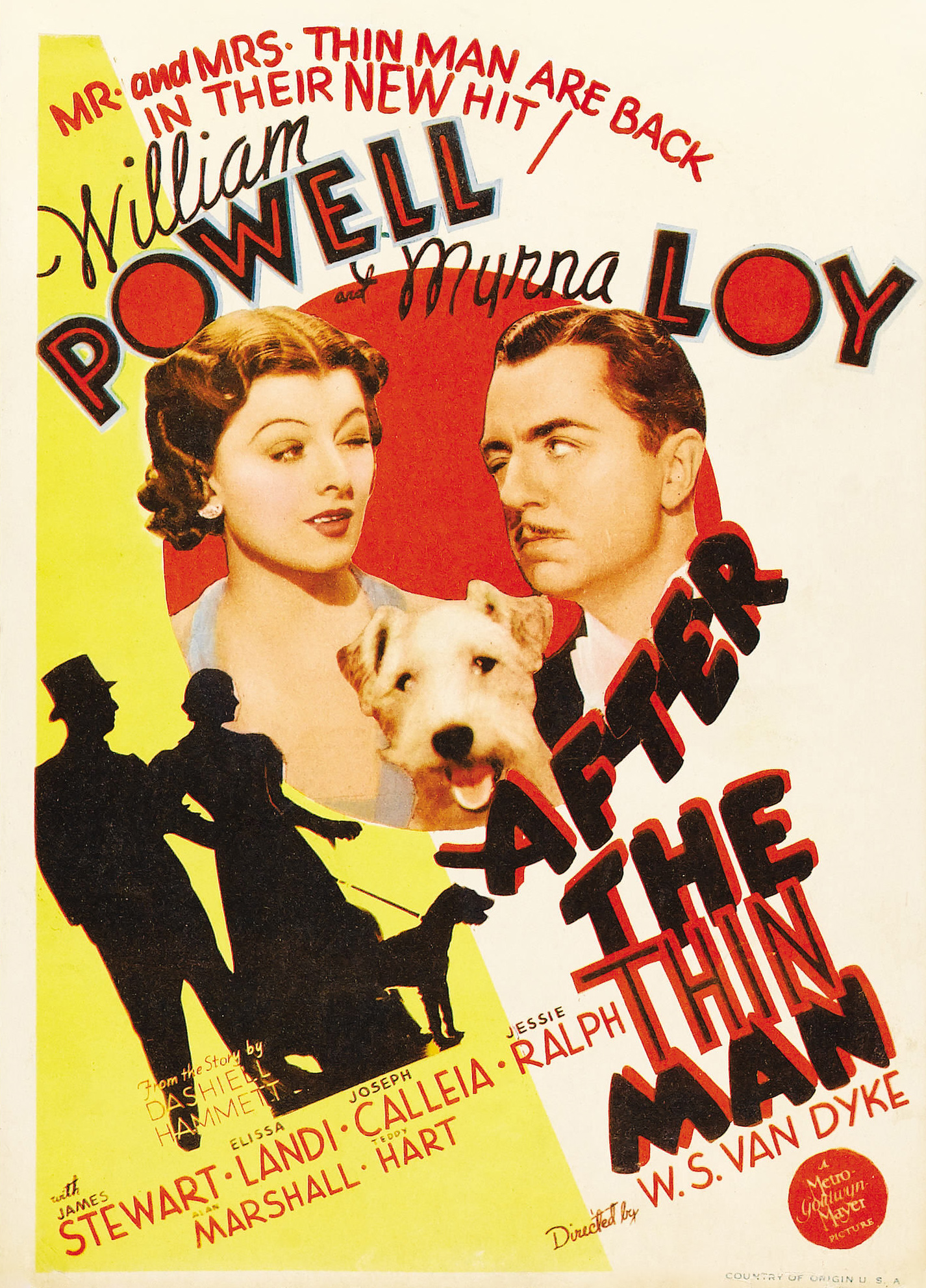
Duel in the Sun (1946)

http://images.moviepostershop.com/duel-in-the-sun-movie-poster-1946-1020206338.jpg
Director: King Vidor

My problems with melodrama were rather irritated by this film. It is technically classified as a Western, but the scenery often vies with the overwrought emotions of the actors. The film is comparable to Gone With the Wind; a rather sweeping story, with a young woman torn between two very different men at the centre. The two films also had David O. Selznick as producer, and looked gorgeous in Technicolor. But where Gone With the Wind succeeded, with its acting, Duel in the Sun faltered.

The attractiveness of the images (and people) on screen were the most enjoyable parts of this film. The costumes are lovely, though at times barely managing to cover Jennifer Jones in some scenes. Gregory Peck is the meanest I have seen him, but I could see why Jones' Pearl was attracted to him. Of the actors, Lillian Gish was the best, showing a subtle to her acting that she had in her silent films.

Ultimately I didn't really like this; characters swung from one extreme emotion to another, without any real explanation about how they got there. While Pearl's predicament is hard and she is judged by all for the way she looks, the film handled that plot without any depth. A disappointment, despite the cast.

Tuesday, 29 September 2015

I've Just Seen: I Was a Male War Bride (1949)

I Was a Male War Bride (1949)


 http://1.fwcdn.pl/po/95/27/39527/7300890.3.jpg

Director: Howard Hawks

The presence of Cary Grant in a film is big drawcard. He is incredibly watchable, being both highly attractive and a great actor. He seemed to have chemistry with almost all of his co-stars, and it is certainly true here; Grant and Ann Sheridan spark off each other, making their eventual romance more believable.

The plot didn't quite progress how I thought it would, which was rather a nice surprise. I always think that the ridiculous plots of screwball comedies are part of the fun. The joy lies in Grant's Captain Henri Rochard's frustration with being close to Sheridan's Lieutenant Catherine Gates. At the film's beginning he is too close, finding himself locked in her bedroom one night. Later the pair are constantly thwarted in their attempts to consummate their marriage, ending up on the opposite side of towns. There is also a lot of jokes about gender roles, something that greatly appeals to me. One is Rochard being classified as a 'war bride,' as a 'war groom' is not catered for under law. It is quite a clever script.

I clearly enjoyed this. A screwball comedy with Cary Grant at his snarky, sexy best (with a bit of cross-dressing thrown in): what's not to like?!

Monday, 28 September 2015

I've Just Seen: Wild Strawberries (1957)

Smultronstället (Wild Strawberries) (1957)

https://s3.amazonaws.com/criterion-production/release_boxshots/4099-25f518e4f42b3977329b44fab0461b56/139_box_348x490_original.jpg
Director: Ingmar Bergman

I feel like I have completed an unofficial trilogy of films that view life from its end: Tokyo Story, Ikiru and now Wild Strawberries. Each film has moved me in different ways; Bergman's film is the most existential of the three, examining Professpr Isak Borg's life from inside his own head.

The title in Swedish is an idiomatic expression that refers to a place that is a quietly significant for a person. For Isak, it is both a literal place where strawberries grow, and a place in this life he associates with his lost love. The film spend much time in the past, as Isak relives many happy and unhappy memories from childhood. The past interacts in the future, as Isak's thoughts are sparked by a physical resemblance between a young hitchiker and his love, both called Sara.

I seem to always approach Bergman's films expecting them to be sombre and difficult to sit through. I don't know why, particularly after seeing The Seventh Seal. While less light-hearted than that film, this was very moving and 'easy' to watch. Hopefully I will stop having this feeling with Bergman, whose status as one of the greatest directors ever is certainly finding no argument with me. A lovely reflection on a life lived (though whether well is up to you to judge). 

Sunday, 27 September 2015

I've Just Seen: Stalag 17 (1953)

Stalag 17 (1953)

https://knoji.com/images/user/stalag1740x60reissue1959(1).jpg
Director: Billy Wilder

I haven't yet watched a Billy Wilder film I didn't enjoy, and I have seen quite a few. I can't think of anyone apart from Kubrick who is able to so deftly move between genres. One of Wilder's great strengths is his handling of actors, which is again on show in Stalag 17. Everyone in the cast is wonderful, particularly William Holden.

Like 12 Angry Men, Wilder manages to move the story beyond its stage origins. The cramped conditions of the camp and the hut allow the suspicions and anger of the men to fester. The mystery of who the informant is draws you in, and the revelation is really well done; I have to admit I guessed wrong, and internally went 'ahhhhh' when it was revealed.

I don't want to say much more for fear of spoiling a potentially wonderful viewing experience. I really liked this, and find my love of Wilder being cemented by each new film of his I see. In my opinion, he is criminally underrated as a director and writer, perhaps because he could do any genre, and often opted for characters over style. See this film, and enjoy a master at work.

I've Just Seen: After the Thin Man (1936)

After the Thin Man (1936)

http://www.doctormacro.com/Images/Posters/A/Poster%20-%20After%20the%20Thin%20Man_04.jpg


Director: W.S. Van Dyke

This film proves that sequels don't always suck. While the detective story is a touch confusing, these parts of the plot were never really the reason to watch the films, and act as a justification to spend more time with Nick and Nora. And really, who wouldn't want to do that?

I can't think of a modern equivalent for the chemistry of Loy and Powell. For me, they are better than Bogie and Bacall, and Tracy and Hepburn (and I really enjoy seeing those two couples on screen!). You can feel the trust between Loy and Powell, that their acting supports and enhances each other. Though the Hays Code removed some of the subtly sexiness of the first film (which came out just before the Code was enforced), the two still sparkle together.

There is no reason not to watch this; there is even an early performance from James Stewart, playing a significant character in the murder story. The screenplay, again written by the Hacketts, is wonderful and was nominated for an Oscar. Here's a taste to whet your appetite:

Nick: Did I ever tell you that you're the most fascinating woman this side of the Rockies?
Nora: Wait till you see me on the other side.

Thursday, 24 September 2015

I've Just Seen: Short Term 12 (2013)

Short Term 12 (2013)

https://www.madman.com.au/news/wp-content/uploads/2013/11/Short-Term-12-Poster_smaller-copy1-518x738.jpg
Director: Destin Daniel Cretton

Short Term 12 relies heavily on the central performance of Brie Larson as Grace, a supervisor at the titular home for troubled teenagers. If played by anyone else, I cannot imagine the film being as good as it is. Larson is great at understatement, and gives Grace a complexity that made me want to know more about her story.

The film's script ends a little too neatly, and some questions still remained. This unfortunately dilutes some of the emotion the film had built up to. However, it is quite moving at times, and the kids are very good. We learn at little bit about their situations, and the film is clearly compassionate towards them.

I did enjoy this, and expect that Larson will be turning up in more films in the coming years. Her most recent one, Room, recently won People's Choice at Toronto.

Tuesday, 22 September 2015

Based On: The Thin Man
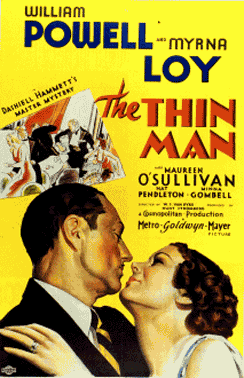
Based On: The Thin Man
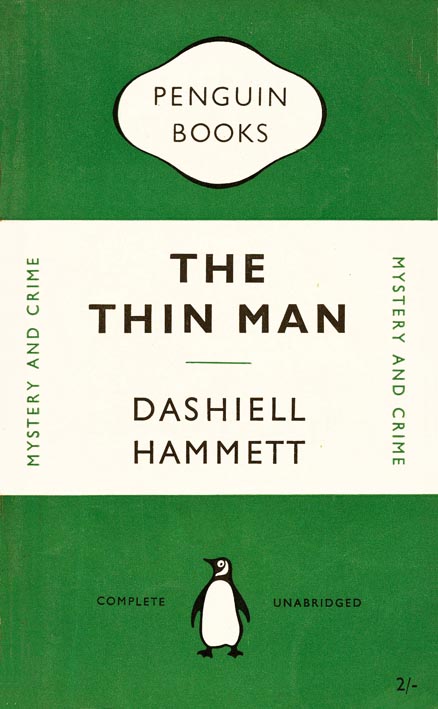
http://www.filmsite.org/posters/thin4.gifhttp://www.bkmag.com/wp-content/uploads/2013/09/1379655208-penguin_hammett_thin_man1.jpg
(The Thin Man: novel and film: 1934)

The differences between Hammett's novel and Van Dyke's film come down to the portrayal of the marriage of Nick and Nora Charles. The outcome of the murder (both its victim and perpetrator) remain the same, though the film opens earlier in the story than the novel does, providing some background to the titular 'thin man.' It does alter Dorothy Wyman's character, giving her a fiancee and a good relationship with her father. In the novel we start at Dorothy's bumping into Nick at the bar, and asking him to help find her father.

The novel is a first person narrative from Nick's perspective. Hammett's Nick seems like the cousin of Chandler's Philip Marlowe; slightly cynical, though quite funny, hard-drinking and a little tough in his opinions about women. This is rather different from the Nick in Van Dyke's film. William Powell's Nick manages to be both sophisticated and clownish. His does drink a lot, but it is played for laughs in the film. Regarding women, Powell's Nick seems to look no further than his wife, who he clearly adores and is very comfortable with. In the novel, Nick never pursues other women, but there is a casualness to their relationship (apparently mirroring Hammett's own relationship with his lover Lillian Hellman).*

The reason for this difference in Nick and Nora's relationship largely comes down to how Nora is portrayed. In Hammett's novel, the first person narration means that Nora is depicted entirely through Nick's perspective; we have no access to her feelings. She is also rather in the background, having conversations with other characters that are not reported. Nora plays no major role in the murder investigation, and Nick interactions with Mimi and Dorothy are reported more than those with Nora.

This contrasts significantly with Myrna Loy's Nora. She actively participates in the murder investigation; when Nick puts her in a taxi in order to go do something else, she does some detective work of her own. There is more dialogue between the couple, and the banter clearly shows Nora's great affection and playfulness with Nick; their marriage is incredibly strong. While the novel ends with Nick explaining the whole case to Nora, the film shows them on their way back to San Francisco, happy to be finally alone with each other again. Loy's Nora is not seen through Nick's perspective, but instead stands as her own character.

Nora's greater prominence in the film comes down to the script. It was written by husband and wife writing duo Albert Hackett and Frances Goodrich, and some critics have argued that the screen relationship between Nick and Nora mirrors their marriage. Van Dyke had asked the writers to give him five scenes of Nick and Nora together, demonstrating the shift from the detective story to the couple's relationship. Goodrich also felt it her duty to make Nora a well-developed character.*

This is one of those rare instances where the film version of a story is equal to (or even better than) the novel source. Nick and Nora are a lot of fun to be around, something Van Dyke realised and decided to emphasise in his film.

*Much of this information (and arguments) come from Rosanne Welch's article 'Giving credit where credit is due: Frances Goodrich Hackett and Albert Hackett and The Thin Man,' Journal of Screenwriting, (January, 2012), Vol. 3, pp. 157-176