Tuesday, 11 August 2015

I've Just Seen: It Happened One Night (1934)

It Happened One Night (1934)

http://www.filmsite.org/posters/itha4.gif
Director: Frank Capra

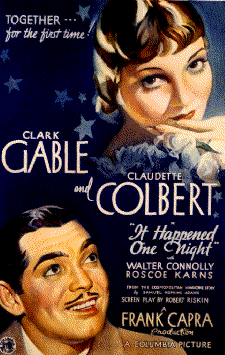
I love this film. It set the benchmark for my favourite film genre, the romantic comedy, with its fantastic chemistry between the two leads, witty dialogue, and scenes of slapstick. The film also has a great grasp of its setting: America in the Depression, where people are moving around the country, looking for work. The 'Daring Young on the Flying Trapeze' scene is one of the most memorable scenes in all the film, creating a lovely sense of people's camaraderie; everyone joins in singing together, and even Ellie and Peter are kind to each other for a while.

There are so many scenes in the film that are a joy: that one, the striptease, the Walls of Jericho, the hitchhiking demonstration, the 'Quit Bawlin' dialogue, all of it is wonderful. The fact that it is Pre-Code makes this film all the more interesting: a year or two later and the striptease scene would not have been allowed.

I have noting negative to say about this film: it is a joy and is still funny and clever eighty years later. Unlike some modern romantic comedies that get the balance of 'rom' and 'com' wrong (and get too sentimental), this film is perfectly balanced, making us care for the characters so that we want them to be together. Another of my favourite films, Roman Holiday has a similar plot, but manages to distinguish itself from its cousin. Both would make a lovely double bill (though I would watch Roman Holiday first, so that It Happened One Night can pick you up after the other film's ending.)

Monday, 10 August 2015

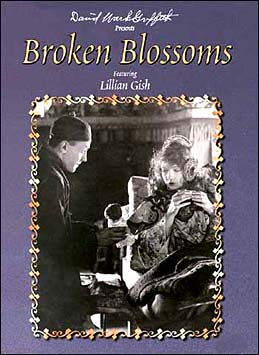
I've Just Seen: Broken Blossoms (1919)


Broken Blossoms (1919)

http://www.filmsite.org/posters/brok.jpg
Director: D. W. Griffith

One must always be aware of the historical and cultural context of a film. Otherwise you may find yourself judging it with modern tastes and ideas, and seeing it as utterly alien to you. This is a risk particularly with early films, especially melodrama. Though Broken Blossoms has moments that rankle (the alternative title 'The Yellow Man and the Girl' was the first instance for me), this film manages to surprise in its sympathetic portrayal of an interracial romance.

Though Cheng Huan is played by American actor Richard Barthelmess, he makes Huan the film's moral centre. He has come to London to spread the news of Buddhism, but has risked becoming corrupted by the uncaring city. He is brought back to his beliefs through he tender care of Lucy, who has escaped her abusive father. Griffith's direction shows an appreciation of Huan's religion, with several scenes of Huan praying before his statues, and speaking about Buddha's teachings.

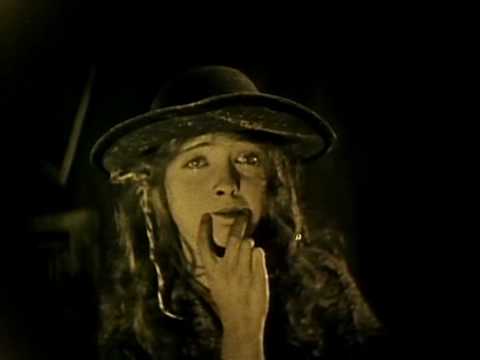
Lillian Gish is one of the best actors of the silent era: the camera loves her face, and she can say so much with a subtle lip twitch or look. Some of the most affecting moments in the film are her character trying to force a smile:

http://i.ytimg.com/vi/4Ira6rA3Hzw/0.jpg
 You can see the pain in her eyes, and how close she feels to giving up.

The boxing scenes in the film hark back to the earliest films, shown in Kintoscopes and Nickelodeons in the late 19th/ early 20th centuries. Such spectacle and action was see to work well on this new technology, and the continuing popularity of action films (and boxing as a subject itself) proves this to be true. 

Broken Blossoms would be a difficult film for anyone who is not interested in film history to watch; and even if you are, you may find it hard to enjoy. However, it is one of the few surviving feature films of the period, and shows yet again how significant Griffith was in developing the language of film. Though I much prefer his next film Way Down East (1920), this is of interest for its handling of race. 

Sunday, 9 August 2015

I've Just Seen: In a Lonely Place (1950)

In a Lonely Place (1950)

http://mvfilmsociety.com/film/wp-content/uploads/2015/02/in_a_lonely_place_1950.jpg
Director: Nicholas Ray

I love a Bogie film: he is ridiculously watchable. His face is complemented by the black-and-white cinematography of Hollywood's Golden Age, and his voice is wonderfully distinctive. In this film he is at his best, a coiled spring of anger and menace. The tension that was reportedly between Bogart and Gloria Grahame on-set seems to have informed their performances for the better; the discomfort adds to the problems in their relationship.

The story is self-reflexive, as Bogart's Dix Steele is a screenwriter who hangs around with actors and directors. One of my favourite scenes was Steele listening to a young woman telling him the plot of a trashy novel; he bristles as she recounts the story, and makes comments dripping with sarcasm that go over her head. The script for the film is fantastic, with witty lines about the film industry. Here's one gem: 'What does it matter what I think? I'm the guy who tried to talk Selznick out of doing "Gone with the Wind"'

The camera shots add a layer of intimacy and danger in several scenes: one scene at a club has Grahame and Bogart sitting close. They both look over Bogart's shoulder, then Bogart turns back, and we can't see his face; only Grahame talking to him. She then nuzzles his neck as well. It is sexy and ominous, made more so because of its public setting.

This is a fantastic noir film with two career-best performances, from a director who did interesting things with his framing and shot construction. The script is also one of the best of the 50s. In short, there is no reason not to watch this. 

I've Just Seen: Magic Mike (2012)

Magic Mike (2012)

http://media2.popsugar-assets.com/files/2012/11/48/2/192/1922283/41a2155ea6f2707c_6597378729424321999.xxxlarge/i/Magic-Mike-Movie-Poster-10.jpg
Director: Steven Soderbergh

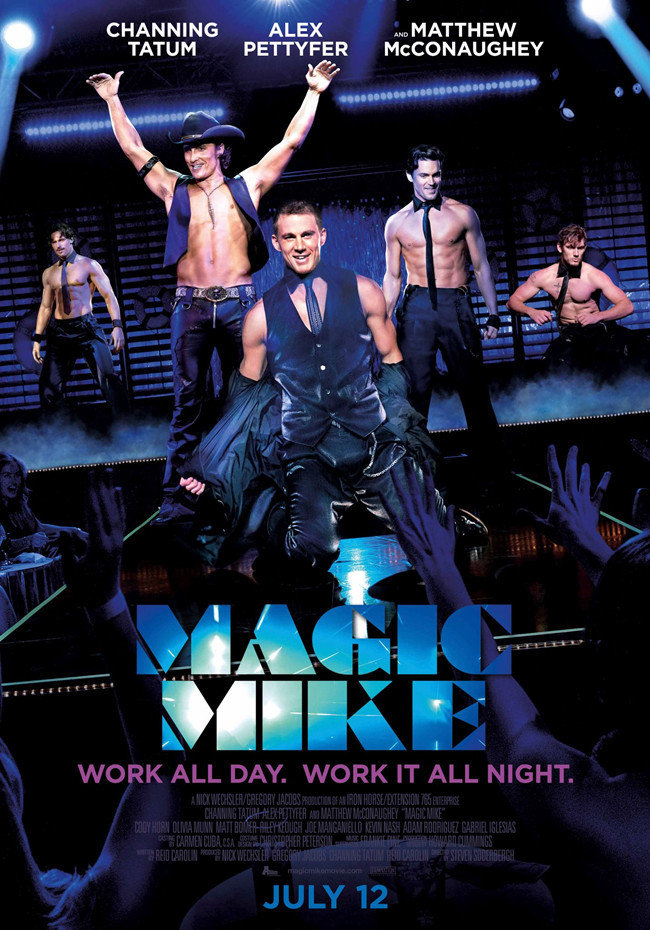
You can tell this is a film not made by a mainstream American director. The shot choices give it away; lots of wide shots. While this makes sense in a film with several dance sequences, Soderbergh uses it for conversation scenes as well. One particular scene happens on a beach, where Tatum's Mike talks with Olivia Munn's Joanna and Cody Horn's Brooke. We don't cut to close-ups of their faces, and watch a series of reverse shots. Instead, Soderbergh holds an extended, wide shot. The effect is to make the audience aware of the characters bodies, and also distances us from the action: it is voyeuristic. It is telling that the final scene between Brooks and Mike has several close-ups of them speaking to each other.

The camera shots align us with the female audiences of Mike's shows, who go along to enjoy the bodies of fit, oiled (and sadly hairless) men. It also portrays the emotional state of Mike, who feels a bit separate from many in his life. He doesn't quite fit in with the other strippers, as he has ambitions outside this life, and doesn't want to fall into the dubious side of the business. Channing Tatum plays Mike really well; he is confident and charming, but imbues him with depth. Matthew McConaughey is a bit of a scene-stealer, with his quietly sinister Dallas. Cody Horn was also good, giving Brooke a streak of wry wit.

The dance scenes are the main highlight. As a straight feminist, the sight of a bunch of good-looking men doing body rolls, hips swivels and general gyrating is a great change from the usual cratering to the (straight) male gaze. While I would never go to one of those places to watch a show (for several reasons, one being that I am a confirmed introvert), I was more than happy to see it on screen: I love a dance scene. Tatum can dance extremely well; it was hard to take your eyes of him when he started.

This is refreshing approach to a story that could easily have been coy and sentimental is handled by a less daring director.

Thursday, 6 August 2015

I've Just Seen: The Imitation Game (2014)

The Imitation Game (2014)

http://www.filmmusicnotes.com/wp-content/uploads/2015/01/imitation_game.jpg
Director: Morten Tyldum

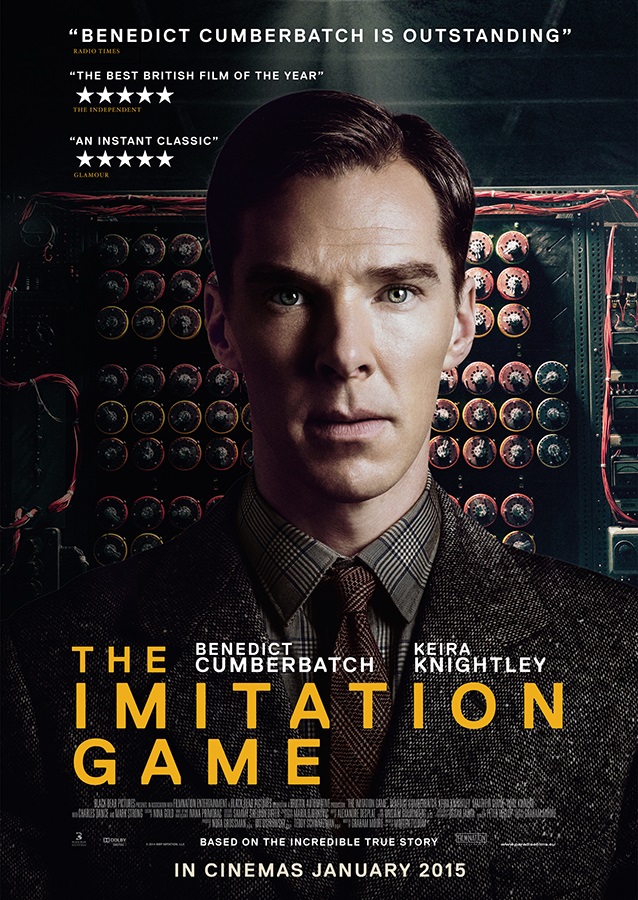
I am a big fan of Benedict Cumberbatch: I have even met him in person (he is not as tall as you would think!). The buzz about his performance in this film is well deserved: he is very good as Alan Turing, giving him reserved depth underneath Turing's socially-awkward surface. I wonder if the opposition to Turing's ideas was so pronounced as it was portrayed in the film, but you need tension to create drama, so it is forgiveable. Alex Lawther almost out-shines Cumberbatch with his performance as the young Turing, and the two performances edit together well. Keira Knightley was a standout for me, playing Joan Clarke with intelligence and compassion. The part felt slightly underwritten, but she makes Clark very interesting.

This is popular telling of history, giving its audience a very 'readable' version of events. For myself I would have liked a little more focus on the goings-on at Bletchley Park, and less on the relationships and espionage plot. But that is purely my own personal taste.

The computer Cumberbatch's Turing builds is the film's other star; it looks beautiful and I loved the many close-ups on its spinning, whirring cogs. Computers today may be smaller and far more powerful, but they are not nearly as visually compelling.

The film makes you want to find out more about Turing as a person, and is highly sympathetic to the barbaric sentence given to him for his homosexuality. He is now being rightly recognised for his work, which has contributed much to our tech-infused society.

I've Just Seen: Drop Dead Gorgeous (1999)

Drop Dead Gorgeous (1999)

http://images.art.com/images/products/large/10120000/10120534.jpg
Director: Michael Patrick Jann

A female-led comedy before Bridesmaids made it cool again, Drop Dead Gorgeous sends-up the fuss around, and the people who participate in, beauty pageants. The humour is broad, and takes obvious swipes at hypocritical Christians, overly-sexed girls, US gun laws, and Mid-West America. I did find it funny, particularly the first half; the ending unfortunately felt haphazard.

The real joy here is the cast of young women, which includes Amy Adams, Brittany Murphy, Kirsten Dunst, and Denise Richards. They more than hold their own alongside Kirstie Alley, Allison Janney, and Ellen Barkin. The mockumentary format alludes to This is Spinal Tap Christopher Guest films, though this is not as good as Spinal Tap; it is not as straight-faced in its delivery.

This reminded me of Pitch Perfect in its approach; it shows that women can do broad comedy just well as men.

Tuesday, 4 August 2015

I've Just Seen: A Very Long Engagement (2004)

A Very Long Engagement (Un long dimanche de fiancailles) (2004)

https://fanart.tv/fanart/movies/2841/movieposter/a-very-long-engagement-532f4ff9a839a.jpg


Director: Jean-Pierre Jeunet

This came out a few years after the utterly wonderful Amelie. Long Engagement is infused with the same fast-paced editing, lovely cinematography and stars Audrey Tatou. We follow Tatou's Mathilde as she searches for her fiance, believed to have been killed in the war. The circumstances of his death are shrouded in mystery, as he was one of a group of men killed by their own side for deliberately harming themselves. We learn more about this group as the film goes on.

The complexity of the plot is the only weakness of this film. I got rather confused at times, trying to remember which soldier's story we were following. It got even more confusing as the stories began to converge with each other. Other than that, this is a lovely romance, with dashes of humour and action. Tatou is great as always, and Marion Cotillard's role, though small, is highly memorable. There is also an appearance from an American actor which was a great surprise: watch it before looking it up!

I know I shall have to watch this again at some point: the plot will (hopefully) be clearer, especially as I now know how it all ends. This is definitely a must-see for lovers of Amelie and WWI films as well.