Showing posts with label silent cinema. Show all posts

Tuesday, 17 July 2018

I've Just Seen: Un Chien Andalou (An Andalusian Dog) (1929)

 Director: Luis Bunuel

Few pieces of art are still shocking 90 years after they were made. They lose their shock value because of changes in society's tolerance for violence or sex; or they are so famous that they become too familiar. While Un Chien Andalou is famous, and has influenced a great many filmmakers and artists, it still provokes a visceral reaction today. But while it is powerful, it is not a fun experience.

At film school you are told that if your film is going to be extremely violent, horrifying or just go plain crazy by the end, you need to put a little taste of it in the first act: you are prepping the audience for what is to come. Un Chien Andalou certainly adheres to this rule. The film's most famous scene, the eye being sliced, happens in the first minute, revolting the audience from the start. From there things become just plain weird, with ants crawling out of a wounded hand, and a man pulling along some dead donkeys and priests on pianos by rope (why? Who knows).

What does it all mean? According to Bunuel it is a cry for death, and the violence of many of the images implies a bloody ending is being asked for. While I like free association editing - it can be very witty - Un Chien Andalou is a hard film to like, or even admire. It is one of the purest examples of a film that doesn't care what the audience thinks, and doesn't even try to engage it for the ride - you have no story to hold onto to.

Much like Salo, I can now say I've seen the film, and have no intention for seeing it again.

Thursday, 5 April 2018

I've Just Seen: Vampyr (1932)

 Director: Carl Theodor Dreyer

Dreyer's films have been hit-and-miss for me. The ones that I liked - Ordet, The Passion of Joan of Arc and Day of Wrath - I really liked or even loved. The ones that I didn't like so much were disappointing, though not without some interesting parts - Dreyer does know how to shoot beautiful images. Vampyr falls into the latter category.

The film is technically a "talkie" with characters occasionally saying lines, but overall Vampyr plays like a silent movie, with its intertitles and constant music. While this is fine in general, the film does rely too much on reading, particularly in its explanations of what a vampire is in this world. It also doesn't really follow a clear plot, instead wandering through a village of supernatural nastiness, often leaving this viewer wondering what was going on.

The most impressive parts of the film are the special effects and one particular scene where the main character imagines his death. While early special effects are primitive compared to today, I am always intrigued by the ingenuity of early filmmakers. Here there are shadow puppets, and double exposure to get that ghostly appearance of a character, something rarely scene in films today.

The imagined death scene is where the film reaches its eerie heights. The main character falls asleep and his spirit wanders away. He discovers his body and watches it being put in a coffin with a window. The camera then cuts between the character's face staring blankly out of the coffin and the view from the window. There is a real sense of being trapped, particularly as the coffin is moved out of the building and towards the grave.

Vampyr is not typical of horror films with its meditative pace and, for a vampire film, lack of fangs. It does have some interesting set pieces, but feels slightly unfinished, as though it was cobbled together, or even started without a script. It is visually impressive but will likely alienate modern horror fans.

Friday, 8 September 2017

I've Just Seen: Girl Shy (1924); The Freshman (1925); The Kid Brother (1927)


Director: Fred C. Newmeyer, Sam Taylor (for the first two films); Ted Wilde, J. A. Howe, Harold Lloyd, Lewis Milestone

My local library recently added a free film streaming service to its online resources. Because it is meant to be an educational resource, the service has a great deal of early cinema classics, as well as foreign language films. This, naturally, suits me perfectly. A large number of Harold Lloyd films are included, and seeing as he appears briefly in the 1001+ list, I thought I'd check them out.

I can see why Lloyd was such a star; he is incredibly likeable. While he started his career imitating Chaplin's tramp character, Lloyd went on to develop his own persona. Where Chaplin is Dickenesque in his exploration of poverty through his tramp, and Keaton is stony-faced as he deals with the chaos going-on around him, Lloyd's Harold plays with ideas of masculinity. In Girl Shy he is just that, playing a tailor unable to speak to women without a considerable stutter; The Freshman follows Harold's attempts to be popular at college, using quirks he has copied from a film; and in The Kid Brother he is referred to as the boy of the family, and his often compared to his burly brothers and father. He even does the domestic work in the house. This underdog status, along with his sweet, shy smile, make him a rather adorable romantic lead.

Like Keaton, Lloyd was renowned for his athleticism. He scales the branches of an immensely tall tree just to keep his beloved in sight; he gets constantly tackled by football players; and in Girl Shy performs one of the most impressive chase scenes in film history. These three films cast him alongside Jobyna Ralston: they were in six films altogether. They have great chemistry, and Ralston sometimes gets to be part of the joke, not just the object of desire.

Only one of these films is included on the 1001+ list - The Kid Brother - the only entry from Lloyd's filmography. This is a shame, because any one of these, along with Safety Last! could be included; they are all funny, clever and impressive, showing the joys of silent comedy as brilliantly as Chaplin and Keaton do too.

Friday, 16 June 2017

I've Just Seen : I Was Born, But ... (Otona no miru ehon - Umarete wa mita keredo) (1932)


Director: Yasujiro Ozu

What a delightful film! I knew that Ozu's early work was rather different from his later films, which are wonderful and brilliant and all that, but rarely are they so sweet and funny as this. Perhaps its because I Was Born, But ... follows two young brothers and their problems fitting into a new school, and coming to a deeper understanding about the adult world; quite different from the sadness at the heart of Tokyo Story, but no less profound.

Keiji and Ryoichi have recently moved with their parents to a new suburb, one that happens to be close to their father's boss Iwasaki. The local kids, one of whom is Iwasaki's son, tease the newcomers, who decide to skip school to avoid trouble. Their father finds out, and tells them that they must go to school and stand up to the bullies. The two boys eventually do this, and everyone becomes friends, but things go awry when the boys discover that their father is seen as the office clown at work. The boys are distressed, argue with their father, and ponder the inequalities in the world.

From that synopsis you might think the film is weighty, but it really isn't. Instead, Ozu lets the boys' pain and anger simmer under the surface of the sweet humour. As a result, the film's profundity sneaks up on you. It is the behaviour of the two brothers that bring most of the humour. They have little quirks, like the funny game they introduce to their new friends, which looks like a variation on dead lions. One of the brothers also occasionally pulls a silly dance pose for no reason. Their interactions with one another are also very cute.

The politics of being a child are beautifully portrayed in this film, as is the earth-shattering discovery that your parents, who are the most important adults in your life, are usually less important in the world than you think they are. The film ends on a lovely note of hope for the future with an image that echoed the last in Chaplin's Modern Times. I really loved this, and unless you hate silent, black-and-white, and 'foreign' films, then you'll enjoy this too.

Friday, 28 October 2016

I've Just Seen: Les Vampires (1915)


Director: Louis Feuillade

Each month I try to watch at least one silent film, something easily done thanks to YouTube and the public domain. The last few silent films I saw were not on the 1001+ list, and I noticed one of those unseen ones, Les Vampires, is one of the longest on the list. Finding a nice sharp version on YouTube, I settled down to make my way through the story's ten episodes (of varying lengths).

The film's title somewhat misled me; I thought I was in for a horror film of some kind. It wasn't until the second episode that I realised that 'the Vampires' is just a name for a gang who like to murder and steal from the wealthy. So that disappointment didn't help my patience with the film.

The story is very simple; a journalist called Philippe Guerande, assisted by a colleague called Mazamette, is trying to uncover the secret organisation/ gang known as "Les Vampires". It is headed by various Grand Vampires, each one supported by Irma Vep (gee, what could that be an anagram of?), a woman with a perchant for danger and murder. Over six-and-a-half hours we watch people get poisoned by pens, severed heads turn up in boxes, people getting captured from windows through the most hilarious means possible, and secret cannons used to launch surprise attacks.

This all sounds fun, and would be if it were packed into two hours. But everthing takes far too long. Cinema was still very much in its infancy, barely twenty years old, and the idea of compressing time had yet to catch on. Instead of a short few-second shot of someone escaping on a roof, we get the whole minute of them making their way across the roof, then down the drainpipe.

If you are trying to convince someone of the virtues of silent cinema, do not show them this film. Only watch if you want to see how far we've come in terms of editing speeds, or have a spare 6+ hours of time you need to fill. At best, it will certainly make you appreciate the craft of Fritz Lang and Buster Keaton all the more. 

Tuesday, 10 May 2016

I've Just Seen: Safety Last! (1923)

Safety Last! (1923)

http://filmhafizasi.com/wp-content/uploads/2013/11/safety_last.jpg

Director: Fred C. Newmeyer, Sam Taylor

While the 1001 Movies list is a great tool for those wanting to expand their viewing experience, it is very much weighted towards more modern films. Of the silents, comedies are largely drawn from the filmographies of Keaton and Chaplin, who are indisputably great, but many other popular stars are ignored; the main one is Harold Lloyd. Safety Last! deserves to be mentioned along with The General and City Lights, being as funny as those films, and featuring equally iconic images.

Like Keaton and Chaplin's characters, Lloyd's 'Boy' works for a living, and his aim is to marry his sweetheart. He has stretched the truth about his employment; his girl thinks he is the general manager when is only a humble sales assistant, and many shenanigans ensue. An irate policeman is also after our hero (a sub-plot common to silent comedies). All this leads to a great third act, involving stunt work that would make Keaton proud: Lloyd climbing the department store building to earn a tidy sum. As someone who is terrified by heights, the laughs come with a dose of fear as we watch Lloyd teeter on the edge of window ledges and hang from clock faces.

Silent comedies have generally aged better than more melodramatic fare from the era, and Lloyd is certainly one of the greats. While I have watched many Chaplin and Keaton, and love both for their different approaches to storytelling, I am looking forward to seeing more of Lloyd. Any suggestions?

Sunday, 13 March 2016

I've Just Seen: Napoleon (1927)

Napoleon (1927)

http://www.michaeldvd.com.au/CoverArtUnverified/7550.jpg

Director: Abel Gance

Filmmakers, unfortunately, don't make biopics like this anymore. Rather than attempt to recreate every event in Napoleon Bonaparte's life, aim at historical verisimilitude, or try to probe into the psychology of this famous character, Gance opts for operatic mythologising. From the opening moments of this epic sweep, we see stirrings of greatness in young Bonaparte, a greatness not recognised by his (snobby) peers. As someone who grew up on English history and comedy, where Bonaparte was the butt of jokes, and the great enemy of Britain, this heroic depiction of the French emperor made my experience all the more fresh and interesting.

I saw the three hours, forty-five-ish cut of the film, with a fantastic score by Carmine Coppola. Incorporating themes from other famous composers, with "La Marseillaise" a constant throughout, the music helps strengthen the epicness of the story. It is particularly masterful in the scene where de Lisle teaches the masses to sing the anthem, their silent voices in time with this famous tune. With its use of French Impressionism techniques, Gance's film feels alive and fresh, the camera moving around with great energy; the scene of Bonaparte being swept around by a storm at sea intercut with scenes of discontent at the National Assembly represented by a swinging camera was a personal favourite.

I really liked this. While long, it rarely dragged, and though I know the ultimate outcome of this period of history, I was swept along by the bravado of the storytelling. It has been added to my list of films I want to see on the big screen, ideally with a live performance of Coppola's score.


Wednesday, 18 November 2015

I've Just Seen: The Thief of Bagdad (1924)

The Thief of Bagdad (1924)

http://silenthollywood.com/sitebuilder/images/1924_Thief_Of_Bagdad2-498x747.jpg

Director: Raoul Walsh

Saying that Walsh is the director of this film feels slightly false; while he was the one who decided where the camera would go (wide shots the wise choice throughout), he wasn't the one who decided to write the story, act the lead role, or create the astonishing sets. The latter of the these belongs to art director William Cameron Menzies and his team; the former to silent film star Douglas Fairbanks.

There are several problems with this film, all to do with its age. Though set in Bagdad, the 'good guys' are all played by white actors, while the 'bad guys' are Asian; Hollywood actually did have a racially diverse cast, its just a pity it does so racistly. Anna May Wong, despite playing a deceitful servant to the princess is far more interesting to watch than Julanne Johnson, whose princess is rather forgettable.

That leads me onto another problem with the film, the acting. I personally don't have a great issue with silent film acting, but it doesn't make for psychologically compelling characters. In this story however it doesn't matter as much, for the story has the quality of folk lore and myth. Others, however, may find much to chortle about.

The biggest star of the film is the sets. They are still amazing to modern eyes, and arguably more so as you know that these days it would largely be CGI. Though it is not how Bagdad really ever looked, they are beautiful works of art; the shiny floors add to the lustre of it all. The leaping through the giant pots sequence was a standout. The special effects to, though it is obvious how they were done, are charming and show how inventive early cinema is.

One can't talk about this film without mentioning at length its leading man Douglas Fairbanks. Despite being in his 40s he bounds around the sets with such vigour and his famous winning smile. This was the first of his films that I have seen, and his star quality is obvious. He is the mastermind behind is gorgeous film.

For the problems with the film, I loved it. Unlike the human drama at the centre of The Son of the Sheik (another silent film set in the Middle East), The Thief of Bagdad is pure spectacle, but on such a breathtaking scale that it is hard not to enjoy. I reminded me of my favourite film from childhood, Aladdin, which clearly knew its cinema history.

Thursday, 8 October 2015

I've Just Seen: The Cabinet of Dr Caligari (1920)

Das Cabinet des Dr. Caligari (The Cabinet of Dr. Caligari) (1920)


 http://pics.filmaffinity.com/The_Cabinet_of_Dr_Caligari-311549286-large.jpg

Director: Robert Wiene

While I would never pretend to be a horror film fan, or possess a great knowledge of its history, I feel I have seen enough horror films to appreciate the genre's antecedents in Dr Caligari. Body horror is the sub-genre I have most enjoyed (perhaps because of its interesting relationship with gender), but I also find psychological horror enjoyably unsettling.

Unfortunately, the twist at the film's end was spoiled for me (from studying film history no less); a circumstance which I believe affected my experience. I won't be cruel and do the same to you. Despite that, I am glad it was included in the film; the original writers were apparently annoyed about the framing story's inclusion.

The production design is still quite impressive, setting the story in an abstract space. As a result, the highly stylised acting is more bearable as they are not aiming at realism. The copy I saw carried the Expressionism into the intertitles, which was at first made it difficult to read, but ultimately worked well.

This is not the ideal silent film to see as your first experience of the form. It also helps to know why it is considered so important in film history; just don't let your reading spoil it for you!

Tuesday, 8 September 2015

I've Just Seen: The Passion of Joan of Arc (1928)

The Passion of Joan of Arc (La Passion de Jeanne d'Arc) (1928)

http://iv1.lisimg.com/image/174316/600full-the-passion-of-joan-of-arc-poster.jpg
Director: Carl Theodor Dreyer

I often think of the court-room drama as the product of the era of the talkies, as such plots tend to have scenes of great speeches and people incriminating themselves through accidental slips of the tongue. Dreyer's film is ostensibly this type of film, portraying the historical event of Joan of Arc's trial after being heavily involved in the Hundred Years' War. However, as it is silent, the actual speech of the characters are less prominent. It is their facial expressions that reveal the loyalties and deviousness of some, and the simple but profound faith of Joan.

When I was around eleven or twelve I was fascinated by the story of Joan, this young woman whose belief led her to move outside the restrictions of her gender and poverty and become acquainted with the Dauphin and participate in several battles of the War. Whether you are religious or not, Joan of Arc is an incredibly person from history.

Dreyer's film is sympathetic to Joan's plight, the camera holding her face in close-up throughout the film, capturing the despair and belief that moves across her face, and the tears she quietly cries. Renee Jean Falconetti is wonderful as Joan, and you feel each accusation with along with her, as well as the disappointment with herself after signing a confession.

Dreyer's camera placement is quite beautiful, and the simplicity of the sets emphasise the humans who occupy the spaces. The camera angles are rarely level with their subjects, either high- or low-angle. The last section of the film has Joan almost exclusively in low-angle: she is above the audience, already given the status of matyr and saint by the story.

This is a very beautiful and moving film that shows that silent films were not always comedies or melodramas, or needed huge, epic scenes to make them cinematic. It shows film's ability to reveal character through close-up, without having to rely heavily on dialogue.

Monday, 10 August 2015

I've Just Seen: Broken Blossoms (1919)


Broken Blossoms (1919)

http://www.filmsite.org/posters/brok.jpg
Director: D. W. Griffith

One must always be aware of the historical and cultural context of a film. Otherwise you may find yourself judging it with modern tastes and ideas, and seeing it as utterly alien to you. This is a risk particularly with early films, especially melodrama. Though Broken Blossoms has moments that rankle (the alternative title 'The Yellow Man and the Girl' was the first instance for me), this film manages to surprise in its sympathetic portrayal of an interracial romance.

Though Cheng Huan is played by American actor Richard Barthelmess, he makes Huan the film's moral centre. He has come to London to spread the news of Buddhism, but has risked becoming corrupted by the uncaring city. He is brought back to his beliefs through he tender care of Lucy, who has escaped her abusive father. Griffith's direction shows an appreciation of Huan's religion, with several scenes of Huan praying before his statues, and speaking about Buddha's teachings.

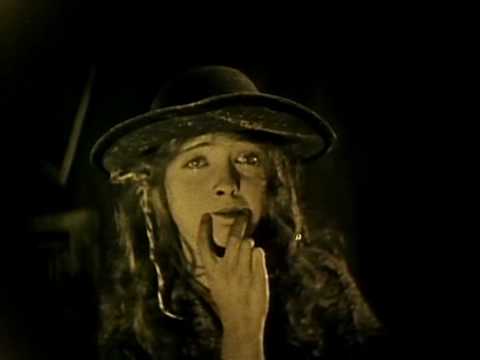
Lillian Gish is one of the best actors of the silent era: the camera loves her face, and she can say so much with a subtle lip twitch or look. Some of the most affecting moments in the film are her character trying to force a smile:

http://i.ytimg.com/vi/4Ira6rA3Hzw/0.jpg
 You can see the pain in her eyes, and how close she feels to giving up.

The boxing scenes in the film hark back to the earliest films, shown in Kintoscopes and Nickelodeons in the late 19th/ early 20th centuries. Such spectacle and action was see to work well on this new technology, and the continuing popularity of action films (and boxing as a subject itself) proves this to be true. 

Broken Blossoms would be a difficult film for anyone who is not interested in film history to watch; and even if you are, you may find it hard to enjoy. However, it is one of the few surviving feature films of the period, and shows yet again how significant Griffith was in developing the language of film. Though I much prefer his next film Way Down East (1920), this is of interest for its handling of race. 

Monday, 20 July 2015

I've Just Seen: The Kid (1921)

The Kid (1921)

http://www.kennelco.com/wp-content/uploads/2012/01/The-Kid-1921-movie-poster.jpg
Director: Charlie Chaplin
Writer: Charlie Chaplin

I know that many film lovers usually prefer one silent film comedian over another: Chaplin or Keaton (or even Lloyd). I have to admit that I like both equally, (and also admit to not having seen any Lloyd yet!). They both approach their stories and comedy differently, and both manage to elicit laughs from me. I cannot choose one over the other: in fact I am glad that we have both of them to enjoy, considering what happened to many silent films.

Having seen most of Chaplin's feature length films and a handful of shorts, The Kid was the main blindspot in my Chaplin filmography. The presence of Jackie Coogan's little kid makes this one of Chaplin's most sentimental films. While I usually bristle at sentiment, Chaplin's has never bothered me, and so I happily felt sad as well as amused by the film. There were less gags than usual, though the window scene was quite funny.

I watched this curtesy of one of Australia's TV channel's 'On-Demand' services; a wonderful resource, but because of internet speeds the picture quality often varied. I still enjoyed watching The Kid and it made me want to re-watch Chaplin's other films.