Director: Ted Kotcheff
So many Australian films set in the outback have an aura of horror around them. There is no supernatural creature in Wake in Fright, with the horror instead comes from the aggressive friendship of the characters of Bundanyabba, who welcome city-raised teacher John Grant into their world of drinking, gambling, roo-hunting and fighting. Grant, well-educated with a suitcase full of books, waiting for a flight to Sydney to see his girlfriend, finds his whole person being completely pulled apart by this oppressive masculine world.
The view of Australia is from an outsider's perspective; we are looking at this culture through the eyes of John Grant, played by English actor Gary Bond, and the director is Canadian. The scenes in the RSL feel almost like a study of a foreign culture, from the bar etiquette to the sudden silence during the Ode. As someone who has grown up in this culture (or parts of it, I don't live in the outback) this makes for interesting viewing. When the film came out in the 70s many Australians found the film hard to stomach: it doesn't paint us in a great light!
There are many memorable scenes in the film, from the aforementioned RSL, to the two-up game, and the rather harrowing kangaroo hunt that takes place over a whole day and night. Throughout all the scenes there is an underlying menace from the locals, particularly from policeman Jock Crawford, and Doc, played by Donald Pleasance, who has a tendency to stare at one too long, and stand too close as he speaks to you. The nightmarish quality to John's experience also comes out in his inability to escape the town: he loses all his money in two-up, so no plane journery, and even a hitch-hiking attempt takes him back to the Yabba.
While not displaying Australia at its best, this is one of the great films about the Australian outback, and how alienating life can be living in the middle of nowhere. It is a horror film about the nasty side of mateship, turning the ideals of the Anzac spirit on its head, and asks Australians to think about just how friendly we really are.
Showing posts with label Aussie Films. Show all posts
Wednesday, 2 August 2017
Friday, 14 October 2016
I've Just Seen: Mad Max (1979)
Director: George Miller
Mel Gibson doesn't get enough credit for his ability to disappear into roles. I had to remind myself that this was the same man who played William Wallace in Braveheart, and Frank Dunne in Gallipoli. While his accent may drift into American occasionally, Gibson's Max Rockatansky is a much quieter role than Wallace, with Max's madness taking a while to fully unleash itself. And when it does, it is a cold rage driven by revenge.
Watching an action film set in the Australia landscape in the rural areas was slightly strange. I am not used to seeing such goings on in leafy green Victoria. Though the budget was clearly low, the thrown together quality adds to the sense of society disintegrating. Nothing is new or shiny, from the cars to the buildings and the clothes.
The story is not new, but its familiarity allows the audience to focus on the action, letting them get swept up in it and not trying to remember how it all fits in. The editing is what really makes this film. From the heart-racing opening chase, we jump from one group to the other, without ever losing the overall arc of the scene. The high cut rate may be very common in action films today, but in the 1970s it would have felt new and exciting.
I decided to watch this series from the beginning, though by all accounts I should skip Thunderdome (I probably won't, but am wary of it), so I am yet to see the recent Fury Road. Mad Max is a great set-up to the dystopian Australia and the story of Max, leaving us at the end with a broken, grieving man who is no longer motivated by law-and-order, but by personal vengeance.
Friday, 16 September 2016
I've Just Seen: Women He's Undressed (2015)
Director: Gillian Armstrong
In the opening titles of my favourite film Some Like It Hot is the credit "Miss Monroe's Gowns ORRY-KELLY." I've been watching this film for years, and have occasionally wondered who Orry-Kelly was. Little did I know that Orry-Kelly, born Orry George Kelly, was Australian and grew up in Kiama, a beautiful town (famous for it blow-hole) two hours down the road from where I live. Kelly moved to the US originally to become an actor, but ended up becoming one of Hollywood's top costume designers, winning three Oscars and dressing some of the world's most famous actors.
Armstrong's film is a reasonably straightforward depiction of Orry-Kelly's life. Along with interviews from other costume designers about his significance in film history, we also hear Kelly's own thoughts, from the letters sent to his mother, and his diaries. The film moves onto look at some of Kelly most famous creations, and particularly focuses on his working relationship with Bette Davis. Throughout the film as well is the elusive figure of Archibald Leach, aka Cary Grant, with whom Kelly shared a flat (and apparently more) in the 1920s in New York.
Armstrong's documentary was largely made with an Australian audience in mind, acting as an introduction to this influential person from our shores. While the dramatisation of Kelly's letters and diaries doesn't completely gel stylistically with the interviews and clips of films shown, the film as a whole is a nice slice of film history, and does make one appreciate the art of costume design. Next time I see "Gowns by Orry-Kelly" in a film's credits, I will appreciate exactly what that means.
Monday, 28 March 2016
I've Just Seen: Predestination (2014)
Predestination (2014)

Directors: Michael Spierig, Peter Spierig
This is the type of film Australia rarely produces: slick science-fiction, set in another country (in this case, America). We meet Ethan Hawke's barkeep returning to work after an horrific accident that has required major facial reconstruction. One night he meets a man called John (Sarah Snook) who promises to tell the most amazing story, which starts with the line 'When I was a little girl ...' From here the movie becomes a time-travelling, identity slipping mystery.
Predestination's pace and tone is what stops the film's story from collapsing in a pile of incomprehensibility, as well as a brilliant performance from Sarah Snook, whose John looks a lot like Leonardo DiCaprio. There are few pauses in the action, so the audience doesn't have time to say 'Hang on, what?' Instead we are whisked away to the next section. The serious, dark tone also means that some of the more bizarre ideas don't stand out as much.
It is hard not to talk about the film without spoiling the story, but the big twist at the end was not as surprising as it could have been, and you a more likely not to have reached it because you were busy trying to keep up with the timeline. While far from perfect, it is a neat thriller with a great deal of style, and as stated previously, well worth seeing purely for Sarah Snook.
Directors: Michael Spierig, Peter Spierig
This is the type of film Australia rarely produces: slick science-fiction, set in another country (in this case, America). We meet Ethan Hawke's barkeep returning to work after an horrific accident that has required major facial reconstruction. One night he meets a man called John (Sarah Snook) who promises to tell the most amazing story, which starts with the line 'When I was a little girl ...' From here the movie becomes a time-travelling, identity slipping mystery.
Predestination's pace and tone is what stops the film's story from collapsing in a pile of incomprehensibility, as well as a brilliant performance from Sarah Snook, whose John looks a lot like Leonardo DiCaprio. There are few pauses in the action, so the audience doesn't have time to say 'Hang on, what?' Instead we are whisked away to the next section. The serious, dark tone also means that some of the more bizarre ideas don't stand out as much.
It is hard not to talk about the film without spoiling the story, but the big twist at the end was not as surprising as it could have been, and you a more likely not to have reached it because you were busy trying to keep up with the timeline. While far from perfect, it is a neat thriller with a great deal of style, and as stated previously, well worth seeing purely for Sarah Snook.
Wednesday, 30 December 2015
I've Just Seen: Newsfront (1978)
Newsfront (1978)

Director: Philip Noyce
Noyce's film explores the era of cinema news, the 1950s in Australia, before television took over broadcasting such things. Different production companies would compete to film the best footage; in the film this is represented by the rivalry between Cinetone and Movietone. The movie incorporates actual archival footage of the historical events in the story (most of which are fact). There are also sections of the film photographed in black-and-white, and others in colour.
The film captures the era of Australia rather beautifully. We see not just the machinations of the news making companies, but the social and historical issues of the time are presented as well. Bill Hunter, one of Australia's greatest actors (familiar to non-Australians from his performances in Muriel's Wedding and Priscilla, Queen of the Desert) is unsurprisingly good as the main character Len Maguire, a cameraman who watches the world change around him, leaving him behind. The rest of the cast are made up of other wonderful Australian actors who all wear the 1950s well.
A very good Australian film about a topic beloved by film: the media.
Director: Philip Noyce
Noyce's film explores the era of cinema news, the 1950s in Australia, before television took over broadcasting such things. Different production companies would compete to film the best footage; in the film this is represented by the rivalry between Cinetone and Movietone. The movie incorporates actual archival footage of the historical events in the story (most of which are fact). There are also sections of the film photographed in black-and-white, and others in colour.
The film captures the era of Australia rather beautifully. We see not just the machinations of the news making companies, but the social and historical issues of the time are presented as well. Bill Hunter, one of Australia's greatest actors (familiar to non-Australians from his performances in Muriel's Wedding and Priscilla, Queen of the Desert) is unsurprisingly good as the main character Len Maguire, a cameraman who watches the world change around him, leaving him behind. The rest of the cast are made up of other wonderful Australian actors who all wear the 1950s well.
A very good Australian film about a topic beloved by film: the media.
Thursday, 1 October 2015
I've Just Seen: The Last Wave (1977)
The Last Wave (1977)

Director: Peter Weir
Peter Weir made this a few years after the incredibly mysterious Picnic at Hanging Rock. While the mystery at the centre of that film is never answered, the events are understandable. In The Last Wave the unsolved mystery is far more inpenetrable; I still am not sure exactly what happened (and I watched this a few weeks ago).
While it is not as successful as Picnic, there is a lot to appreciate in The Last Wave. The bizarre weather sequences are wonderfully executed. A scene where Richard Chamberlain's David looks out his car to see the outside world drowned in water is striking. In fact, what I remember about the film is how it looked. The opening scene is one of the best I have seen, setting the unsettling mood from the get-go. The acting is pretty good, David Gulpilil the standout as Chris Lee, who tries to inform David about this world.
I had not really heard of this film before seeing it. It is included in the 1001 Movies, but seems to have been overshadowed by Weir's Picnic. The Last Wave is definitely worth your time, though if you can't cope with unanswered mystery you may find it frustrating.
Director: Peter Weir
Peter Weir made this a few years after the incredibly mysterious Picnic at Hanging Rock. While the mystery at the centre of that film is never answered, the events are understandable. In The Last Wave the unsolved mystery is far more inpenetrable; I still am not sure exactly what happened (and I watched this a few weeks ago).
While it is not as successful as Picnic, there is a lot to appreciate in The Last Wave. The bizarre weather sequences are wonderfully executed. A scene where Richard Chamberlain's David looks out his car to see the outside world drowned in water is striking. In fact, what I remember about the film is how it looked. The opening scene is one of the best I have seen, setting the unsettling mood from the get-go. The acting is pretty good, David Gulpilil the standout as Chris Lee, who tries to inform David about this world.
I had not really heard of this film before seeing it. It is included in the 1001 Movies, but seems to have been overshadowed by Weir's Picnic. The Last Wave is definitely worth your time, though if you can't cope with unanswered mystery you may find it frustrating.
Tuesday, 22 September 2015
I've Just Seen: Candy (2006)
Candy (2006)

Director: Neil Armfield
One could make comparisons between Candy and Lost in Translation. In both films we follow two people who feel like they are detached from the rest of the world, finding in each other a bond that sustains them. In Candy the two characters, Candy and Dan, are bound through their use of heroin as well as their love for each other; in fact their love and drug-taking seems to be inextricably linked.
The film is structured in sections called 'Heaven,' 'Earth' and 'Hell.' We see their descent from the heights of joy in each other and their highs, to the rather painful realities of life as addicts, to the disintegration of their love. Heath Ledger and Abbie Cornish are very good as Candy and Dan, though occasionally they appeared to look rather well for malnourished heroin users. Some critics disliked the film, saying that Candy and Dan were too self-absorbed to be sympathetic. This seems a strange criticism; they are drug addicts, surely it is no surprise that they focus purely on each other and their situation.
This is a very good Australian film with two strong lead performances. I would always encourage people to watch Australian films (unless they are terrible), and this is one that I would certainly recommend.
Director: Neil Armfield
One could make comparisons between Candy and Lost in Translation. In both films we follow two people who feel like they are detached from the rest of the world, finding in each other a bond that sustains them. In Candy the two characters, Candy and Dan, are bound through their use of heroin as well as their love for each other; in fact their love and drug-taking seems to be inextricably linked.
The film is structured in sections called 'Heaven,' 'Earth' and 'Hell.' We see their descent from the heights of joy in each other and their highs, to the rather painful realities of life as addicts, to the disintegration of their love. Heath Ledger and Abbie Cornish are very good as Candy and Dan, though occasionally they appeared to look rather well for malnourished heroin users. Some critics disliked the film, saying that Candy and Dan were too self-absorbed to be sympathetic. This seems a strange criticism; they are drug addicts, surely it is no surprise that they focus purely on each other and their situation.
This is a very good Australian film with two strong lead performances. I would always encourage people to watch Australian films (unless they are terrible), and this is one that I would certainly recommend.
Sunday, 13 September 2015
I've Just Seen: Romper Stomper (1992)
Romper Stomper (1992)

Director: Geoffrey Wright
While watching this film I was reminded of Kubrick's A Clockwork Orange; a connection I am not alone in drawing. It is largely down to the ultraviolence of the gang of young men, though unlike Alex, who is not driven by any real political ideas, these men are proud Neo-Nazis. As with Kubrick's film, Romper Stomper was controversial for its alleged uncritical depiction of such violence.
Russell Crowe is a magnetic terror in this film; almost bestial as he snarls at the world. The other performances are good, but none is as good as Crowe's. He is the true believer in the group, ultimately beyond the reach of human emotions like love. The cinematography paints Australia as grungy and ugly, reflecting both the perspective of the racist gang, who see this new multicultural Australia as ugly, and the ugliness of their ideas.
I wouldn't say I liked this film, but it is always good to become better acquainted with the filmmaking from one's own country. Also demonstrates how great Russell Crowe is as an actor.
Director: Geoffrey Wright
While watching this film I was reminded of Kubrick's A Clockwork Orange; a connection I am not alone in drawing. It is largely down to the ultraviolence of the gang of young men, though unlike Alex, who is not driven by any real political ideas, these men are proud Neo-Nazis. As with Kubrick's film, Romper Stomper was controversial for its alleged uncritical depiction of such violence.
Russell Crowe is a magnetic terror in this film; almost bestial as he snarls at the world. The other performances are good, but none is as good as Crowe's. He is the true believer in the group, ultimately beyond the reach of human emotions like love. The cinematography paints Australia as grungy and ugly, reflecting both the perspective of the racist gang, who see this new multicultural Australia as ugly, and the ugliness of their ideas.
I wouldn't say I liked this film, but it is always good to become better acquainted with the filmmaking from one's own country. Also demonstrates how great Russell Crowe is as an actor.
Sunday, 23 August 2015
I've Just Seen: Careful, He Might Hear You (1983)
Careful, He Might Hear You (1983)

Director: Carl Schultz
This is one of those films where the main character is a child, yet it is not a 'family film.' It is not full of violence or sex, but rather the themes of parental guilt, sibling rivalry and complicated adult relationships would go over a child's head. 'PS', the main character's nickname, is practically orphaned and lives with an aunt who is just above poverty (the story is set in the Great Depression, where almost everyone was poor). His life changes when his other aunt, the sophisicated Vanessa, comes to Australia, and seeks to better his life.
The plot could very easily have focused on the relationship of Vanessa and Lila, with PS' character only in the background. However, almost everything that happens is filtered through PS' perspective. He hears things that he shouldn't, and ends up coming to resent the actions of Vanessa. The story truly lies in their complicated relationship.
The performances are all quite good. Nicholas Gledhill, who plays PS, is pretty good with his facial expressions, though sometimes his talking is a bit strained. But hey, he was very young when he did this, and it is one of the better child performances. Definitely worth a watch.
Director: Carl Schultz
This is one of those films where the main character is a child, yet it is not a 'family film.' It is not full of violence or sex, but rather the themes of parental guilt, sibling rivalry and complicated adult relationships would go over a child's head. 'PS', the main character's nickname, is practically orphaned and lives with an aunt who is just above poverty (the story is set in the Great Depression, where almost everyone was poor). His life changes when his other aunt, the sophisicated Vanessa, comes to Australia, and seeks to better his life.
The plot could very easily have focused on the relationship of Vanessa and Lila, with PS' character only in the background. However, almost everything that happens is filtered through PS' perspective. He hears things that he shouldn't, and ends up coming to resent the actions of Vanessa. The story truly lies in their complicated relationship.
The performances are all quite good. Nicholas Gledhill, who plays PS, is pretty good with his facial expressions, though sometimes his talking is a bit strained. But hey, he was very young when he did this, and it is one of the better child performances. Definitely worth a watch.
Thursday, 23 July 2015
I've Just Seen: The Black Balloon (2008)
The Black Balloon (2008)

Director: Elissa Down
I have some personal connections to this film: a few family friends were extras in this film, one even has a speaking role. It was fun spotting them throughout the film. The other connection is the director Elissa Down: she ran a two-day directing course that I attended earlier this year. This was her debut feature film, and has semi-autobiographical elements. I had seen the film a few years ago, but couldn't remember much of the story. I was glad I re-watched it: this is a great directorial debut, and a great Australian film.
Thomas is trying to be a normal teenage boy, and spends the film trying to pretend that his brother is fixable. Charlie, his older brother, has autism and ADD, and causes Thomas much embarrassment. Down gets the balance between humour and pathos just right: the family fights are both funny and sad. Down and Baker use camera angles really well, using Dutch angles when the tension mounts.
This did get a small release overseas, and I would definitely recommend it. The acting is great from everyone: Toni Collette is the film's heart, and Luke Ford is DiCaprio-like in his portrayal of Charlie. I hope Down gets to make another film soon: she is a very talented filmmaker.
Director: Elissa Down
I have some personal connections to this film: a few family friends were extras in this film, one even has a speaking role. It was fun spotting them throughout the film. The other connection is the director Elissa Down: she ran a two-day directing course that I attended earlier this year. This was her debut feature film, and has semi-autobiographical elements. I had seen the film a few years ago, but couldn't remember much of the story. I was glad I re-watched it: this is a great directorial debut, and a great Australian film.
Thomas is trying to be a normal teenage boy, and spends the film trying to pretend that his brother is fixable. Charlie, his older brother, has autism and ADD, and causes Thomas much embarrassment. Down gets the balance between humour and pathos just right: the family fights are both funny and sad. Down and Baker use camera angles really well, using Dutch angles when the tension mounts.
This did get a small release overseas, and I would definitely recommend it. The acting is great from everyone: Toni Collette is the film's heart, and Luke Ford is DiCaprio-like in his portrayal of Charlie. I hope Down gets to make another film soon: she is a very talented filmmaker.
Saturday, 18 July 2015
I've Just Seen: South Solitary (2010)
South Solitary (2010)

Director: Shirley Barrett
Writer: Shirley Barrett
Notable Actors: Miranda Otto, Marton Csokas, Essie Davis, Barry Otto
This Australian film follows Otto's Meredith Appleton, who moves to the island of South Solitary with her lighthouse-keeping uncle. She experiences isolation and alienation from almost everyone on the island.
The visuals of this film are its great strengths, as well as the performances. The island is a beautiful place, but certainly far from society. The sound of the waves never gives up, and the colour is often washed-out. Miranda Otto gives Meredith a girlish confidence that slowly dissolves throughout the film. Csokas' Jack Fleet is a strong, silent type, and plays it well. The young girl Meredith be-friends is wonderful, really funny and well-acted by Annie Martin. There is also an assortment of animals, including a very cute sheep and some fickle carrier-pigeons.
The film is effective but a touch insubstantial, with a subtextual romance going on at its centre.
Director: Shirley Barrett
Writer: Shirley Barrett
Notable Actors: Miranda Otto, Marton Csokas, Essie Davis, Barry Otto
This Australian film follows Otto's Meredith Appleton, who moves to the island of South Solitary with her lighthouse-keeping uncle. She experiences isolation and alienation from almost everyone on the island.
The visuals of this film are its great strengths, as well as the performances. The island is a beautiful place, but certainly far from society. The sound of the waves never gives up, and the colour is often washed-out. Miranda Otto gives Meredith a girlish confidence that slowly dissolves throughout the film. Csokas' Jack Fleet is a strong, silent type, and plays it well. The young girl Meredith be-friends is wonderful, really funny and well-acted by Annie Martin. There is also an assortment of animals, including a very cute sheep and some fickle carrier-pigeons.
The film is effective but a touch insubstantial, with a subtextual romance going on at its centre.
Friday, 8 May 2015
I've Just Seen: In the Cut (2003)
In the Cut (2003)

Director: Jane Campion
Writers: Jane Campion, Susanna Moore (from Moore's novel)
Notable Actors: Meg Ryan, Mark Ruffalo, Jennifer Jason Leigh and an uncredited Kevin Bacon
My enjoyment of Jane Campion's films varies. I really liked An Angel at My Table and Sweetie, thought Bright Star was beautiful looking if not as deep as I expected, and felt largely underwhelmed by The Piano. In the Cut is uneven, with some good performances, particularly from Leigh and Ruffalo. Meg Ryan was an interesting choice, but ultimately I didn't get a handle on what her character wanted. Sub-plots were not really wrapped up, and I was not entirely sure what Kevin Bacon was doing here.
The cinematography was deliberately in and out of focus throughout the film, emphasising the shiftiness of many of the characters. The colour palette was washed out browns with occasional splashes of blood. The sex scenes are not really salacious, and its is only seeing Meg Ryan playing against type that makes them remarkable. If you want to see an erotic crime thriller, watch Basic Instinct; it is more bonkers, and more enjoyable as a result.
Director: Jane Campion
Writers: Jane Campion, Susanna Moore (from Moore's novel)
Notable Actors: Meg Ryan, Mark Ruffalo, Jennifer Jason Leigh and an uncredited Kevin Bacon
My enjoyment of Jane Campion's films varies. I really liked An Angel at My Table and Sweetie, thought Bright Star was beautiful looking if not as deep as I expected, and felt largely underwhelmed by The Piano. In the Cut is uneven, with some good performances, particularly from Leigh and Ruffalo. Meg Ryan was an interesting choice, but ultimately I didn't get a handle on what her character wanted. Sub-plots were not really wrapped up, and I was not entirely sure what Kevin Bacon was doing here.
The cinematography was deliberately in and out of focus throughout the film, emphasising the shiftiness of many of the characters. The colour palette was washed out browns with occasional splashes of blood. The sex scenes are not really salacious, and its is only seeing Meg Ryan playing against type that makes them remarkable. If you want to see an erotic crime thriller, watch Basic Instinct; it is more bonkers, and more enjoyable as a result.
Friday, 27 February 2015
Great Southern Land Films: Two Films by Sarah Watt
This particular Double Feature looks at two films from Australian director Sarah Watt: Look Both Ways (2005) and My Year Without Sex (2009). Watt had a great flair for animation, using it in both her films. I speak in past tense, for Watt died in 2011 after suffering with cancer for six years.
In Look Both Ways the central story follows Meryl (Justine Clarke) and Nick (William McInnes, Watt's husband) who meet at the scene of a train accident and discover they live near each other. Meryl is obsessed with death, constantly imagining terrible things happening to her, such as the train she is on crashing, drowning at the swimming pool, being held at gun point going outside at night. Nick has recently discovered he has testicular cancer that has spread to his lungs. The train accident that connects them was a young being hit and killed by a train.
In My Year Without Sex Natalie, mother of two, collapses with a ruptured brain tumour and is told not to do any strenuous work for a year, most galling being sex. The film follows Natalie, her husband Ross and their children for the next twelve months as they navigate issues like finances, pets, friends and life in the suburbs along with death, faith and love. Watt's animation is used My Year in a very small way; the film is segmented throughout by inter titles that are words or phrases associated with sex: 'Doggy Style' is used for the segment about the family dog, and the film's climax is called 'Climax.' These are accompanied by images (not pornographic) drawn by Watt.
Clearly, death is a major part of both stories. It hangs over the characters, weighing down their relationships with each other. For Natalie and Ross it removes a significant aspect of their marriage, creating tensions between them; Ross is only slightly tempted by a pretty work colleague, but it is only shown as a passing moment, and is clearly a result of the abstinence enforced at home. Meryl and Nick meet because of a death; Meryl feels that death is a violent force that is following her, while Nick has visions of the cancerous cells infiltrating his body. Nick's situation puts a dampener on any new relationships and thus swiftly tries to end his burgeoning one with Meryl.
The setting for both films is the suburbs, and amongst people living on the cusp of middle-class/ working-class. The characters' focus shifts from the major fears of mortality to the everyday stresses of finance and work, transforming the suburbs to a place of survival similar to the outback. It is not a stultifying place, but just as dangerous as the wild, with death around every corner.Lest this write-up makes these films sound depressing, they are not. There is a gentle vein of comedy running through them, particularly My Year. And, as with many of these films, living life wins out over living in fear of death.
The two films have an added poignancy and honesty knowing what happened to Watts a few years later. It is very sad looking at these two films, knowing that there won't be anymore; Watts' films, though few in number, are idiosyncratically hers. It is a great loss to the Australian film industry. Thursday, 19 February 2015
Great Southern Land Films: Double Feature: Lantana (2001) and Blessed (2009)


Films that have 'alternative structures' feel like the audience is made to work a little bit harder than in linear, single protagonist films. The writer/director throws us pieces from different parts of the story, leaving us to construct the whole picture by ourselves as we watch. Lantana and Blessed both use a branching structure, as different branches all eventually lead to the trunk. Blessed also has a looping structure, as we see the same day playout from different perspectives.
Lantana follows a group of people living in suburban Sydney as their various lives converge through the lead-up to the mysterious death of one of the women: an anonymous image of her body opens the film. Themes around grief, adultery and marriage are raised in the many storylines. Blessed follows several teenagers on the streets of Melbourne over one day, then swings back to view the same day from their mothers' perspective. All are from lower classes; two of the children are now homeless; two are girls who steal the wealthy school uniforms that one of their mothers make; another is a boy who breaks into an old woman's home; one teenage boy hasn't been home for weeks; and one is a middle-aged Aboriginal man who is reluctant to visit his mother on his birthday. Both films are based on plays: Lantana on Speaking in Tongues by Andrew Bovell, and Blessed on the collaboratively written Who's Afraid of the Working Class?
It is interesting to compare the two, for they deal with two different sections of Australian society. The characters in Lantana are largely middle-class and wealthy (the notable exception being Vince Colosimo's family); Blessed is about families living on the cusp of poverty (one mother and son couple is wealthy but it is presented as being an empty existence).
Lantana is focused on the relationships between adults, particularly married couples: Leon and Sonja, Valerie and John, Nik and Paula, Jane and Pete. All their marriages are in crisis at the film's beginning, with Jane estranged from Pete and having a dalliance with Leon, and Valerie wondering if John is having an affair with one of her patients. The image of lantana, a weed that grows in thick bushes, represents the interconnected nature of the storyline. It also subverts the idea of a 'family tree.' All the families in this film have become messy and twisted; they are not longer sturdy branches but snappable twigs that are entwining themselves with other trees (apologies for getting too English-student-y).
The title for Blessed comes from a scene halfway through the film, when Frances O'Connor's character Rhonda meets with her social worker. They are discussing her children, Stacey and Orton, who, we have previously seen, have left home and are now roaming the streets. The social worker questions Rhonda commitment to her children, and Rhonda responds 'They are my blessing.' This encapsulates the idea explored in the film: that children are meant to be 'blessings' to their parents. Each family, in some way, has failed in recognising the importance of each other: the two girls dismiss their respective mothers, seeing them as failures; the Aboriginal man cannot forgive his adopted mother for keeping him from meeting his birth mother; one of the young boys won't contact his mother to tell her he is okay (partly because he is not); and Rhonda, while loving her children, cannot keep them safe from her abusive boyfriend.
These two films explore the underbelly of suburban Australia, Lantana in Sydney and Blessed on the streets of Melbourne. All the families in these environments are in crisis, and some are beyond repair.
Lantana is internationally well-known and is included on the 1001+ Movies to See Before You Die list, and of the two is more polished. However, Blessed boasts as good a cast, with Frances O'Connor, Miranda Otto and Deborah Lee-Furness playing three of the mothers. Arguably, it also has a greater emotional punch to its ending. If you haven't seen either I would recommend doing so, though international readers may have difficulty locating a copy of Blessed.
Friday, 13 February 2015
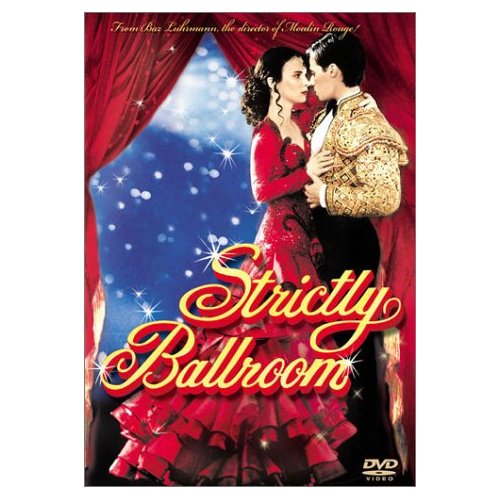
Great Southern Land Films: Strictly Ballroom (1992)

It is Valentine's Day in the merry old land of Oz, and despite not having reason to celebrate, being both single and rather cynical, I am using it as an excuse to look at one of the best Australian films with a sweet romance at the centre: Strictly Ballroom by Baz Luhrmann.
I have history with this film (in a good way). In Year 10 for one of our English assessment tasks (a subject I love with every fibre of my being) we had to write a film review. Rather than getting us to watch a film on our own, them do it from home, the whole year spent half a day watching the film, then 45 minutes writing the review. Why Strictly Ballroom? Well, if you are Australian you have to encounter a certain amount of Australian content in the curriculum at school. It was a girl's school, so maybe they thought we would enjoy the camp and dancing (I certainly did). In this particular exam, I topped the year, getting 20/20 and had the honour of having my review read out. However, I was sick the day that happened, and had to experience my teenage bashfulness post-fact.
I did look through my old school work, but alas, could not find the test; it must have been thrown out in a fit of school-work purging. But I do remember using the word 'bombastic' (one of my favourite words) and referred to the fast-paced performances of Pat Thomson as mother Shirley and the late, great Bill Hunter as Barry Fife. We were not asked for five-star ratings, but I do believe I said I enjoyed it, and I probably would have given it five stars: it is a classic, and a very Australian one at that.
A confession, though really it is something that I have no shame about: I love a good dance scene, though poorly filmed ones are painful (show me some feet; keep the camera steady!). In my defence, I have been dancing (non-professional) for twenty years, trying a variety of styles. I have not done ballroom, but still love the dancing in this film. Because of his theatrical background Luhrmann understands how to film and frame a dance sequence: plenty of long shots, editing that keeps the continuity of the movement going, and the sequences actually contribute to the story.
The story has several plots, all of which are leading to the Pan-Pacific Grand Prix: Scott wants to do his own steps, Fran needs to emerge butterfly-like from underneath her glasses, Scott's Dad need to undergo a similar transformation, and Barry wants to stop Scott from doing his own thing. History is revisited, prejudices are broken, love blossoms, and all done as everyone wears sequins, ruffles and fluoro colours.
The central relationship between Scott and Fran is fuelled by their mutual love of dance. Scott is incredibly talented, while Fran is a beginner in the class, though clearly knows more about dance than she lets on. The best example of this is the 'Perhaps, Perhaps, Perhaps' sequence; despite being observed by all and sundry, there is a wonderful intimacy to the scene. Scott, rather than focusing on the dancing, is really enjoying being so close to Fran, who is relaxing into the movement, and only loses it when she notices Scott's ex-dance partner.
The secondary characters are all played with great extravagance and, as my sixteen-year-old self noted, bombast by the cast. The two young children are very cute, acting as a Greek chorus to the activities of the adults. The humour is very Australian: laughing at kitsch whilst also enjoying it (much like our love of ABBA). The costumes add to the humour, they are both wonderful and tacky, the highlight naturally being Fran's pasadoble dress.
If you need an injection of fabulousness into your life, watching this in a triple billing with Muriel's Wedding and Priscilla, Queen of the Desert.
Wednesday, 4 February 2015
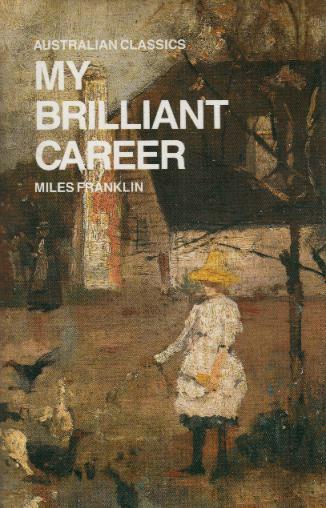
Great Southern Land Films: Based On: My Brilliant Career (1979)
In the 1970s Australia elected a progressive Prime Minister in the form of the late Gough Whitlam. His sweeping reforms of many aspects of Australian life included greater funding to the arts. The result was a boost of film activity which led to Australia experiencing its own New Wave along with many other countries. Gillian Armstrong's My Brilliant Career (1979) is an example of one of these films. It engages with contemporary (at the time) ideas about feminism, despite being based on a novel published in 1901.
One could argue that the love story in the novel is not very romantic. Very little 'romantic' language is passed between Sybylla and Harold. It is more a battle of wills, and Sybylla trying to live according to what she knows about herself. She also hates being touched, and Harold only comes close to kissing her once towards the novel's end.
As with any film set in a historical past, the costumes come to the fore; we are highly aware that these characters are living in a different period. This creates a distance that is less overt in the novel. We are thoroughly ensconced in Sybylla's first person narrative that the reader sometimes forgets what era with are in, only noticing when she talks about carriages or the ball. In the film, in any film that is set in a historical past, you are always aware about the time period.
The costumes also add to the romance of the story. Almost every period drama has some element of romance, if not being the actual subject of the story. Lace, bouffant hair-dos, corsets, structured suits and men on horses play into the romantic imagination. Of course, this film does occasionally undercut some of the romantic moments. Sybylla deliberately undermines a cliched romantic moment on a boat; just as they are gazing into each others eyes she capsizes the boat, ruining the moment, and their clothes. The squalor of Sybylla's actual home and at M'Swat also undermines this romantic image of the past, reminding us of what life was like for most people.
The greatest change from the novel is the ending of Sybylla's life working as a teacher/governess. In the film Mr and Mrs M'Swat believe that Sybylla is setting her cap at their eldest son; her open, chummy-ness being misconstude again. In Franklin's novel however, Sybylla becomes increasingly ill living with the family. She is physically, emotionally and spiritually starved. The M'Swats are kindly concerned for her welfare and send her home, dismissing the debt Sybylla's father owes them. Why change it, you may ask?
The film wears its feminism on its sleeve, and engages with the narrow avenues of life available to women more overtly. Enhancing the romance makes complicates Sybylla's desire to be independent, offering her a very tempting path for the more traditional life. In the novel, Franklin presents Sybylla as someone who would not cope with the drudgery of living in an uncultured backwater. In marrying Harold, she would still be stuck on this part of the world, though better off then many others.
This is an interesting story that explores the unease of a culturally hungry woman living in the harshly beautiful Australian outback, putting it in the second of my Australian film categories (for a refresh, go here).
Sunday, 25 January 2015
Great Southern Land Films: The Castle (1997)
As you can tell from that write-up, the film falls squarely into the suburban category of Australian films. However, the suburbs are not presented as a soul-crushing place to live, but is celebrated for its sense of community. Darryl is not only fighting for his home, but also his neighbours, two of whom are Lebanese immigrants. There is gentle satire about the obliviousness of the Kerrigans, who don't realise their lack of taste or culture. But it is not a negative thing; the Kerrigans are a happy family who care and love each other without judgement. Even Wayne Kerrigan, in gaol for armed robbery, is still part of the family.
It is Australia land in the land of Oz (it is 26 January here), and what better way to celebrate than with a cracking local classic: The Castle (1997). Directed by Rob Sitch, written by Sitch, Santo Cilauro, Tom Gleisner and Jane Kennedy, this presents an hilarious take on the old David-and-Goliath story. It is an early role of Eric Bana, and also stars Michael Caton, Anne Tenney, Tiriel Mora, Stephen Curry, Sophie Lee ('beautiful' Tania from Muriel' Wedding) and the late, great Charles 'Bud' Tingwell.
When Darryl meets Lawrence, he doesn't see any disparity in their lives, though he concedes Lawrence is more intelligent. Lawrence also recognises this quality of the Kerrigan family, and believes it to be worth defending. Australians like to think of themselves as egalitarian, and this film celebrates that idea.
This is the Casablanca of Australian films; many of its quotes are now part of the Australian vernacular. 'How's the serenity!' is an exclamation of contentment, usually used when holidaying in Bonnydoon. 'Tell'm he's dreaming!' is used with scoffing derision upon hearing someone's ridiculous offer on your boat or any object you are selling. 'That's going straight to the pool room' denotes a cherished object, like a handmade mug. 'It's Mabo, it's the vibe' should be used when positing a feeble argument why something is unfair.*
I cannot honestly say how this film would be received by non-Australian audiences. It is very well-loved here (and I am surprised that it is not showing on free-to-air television today) for its representation of Australian life; how much of it translates would be interesting to see. According to Wikipedia, it was shot over 11 days, and was made for the grand total of $75 000. It made $10.3 million in Australia; clearly, it went straight to the pool room!
*A court case that recognised native title land rights in Australia. For more information: https://en.wikipedia.org/wiki/Mabo_v_Queensland_%28No_2%29
Saturday, 17 January 2015
Great Southern Land Films: The Tree (2010)
The Tree (2010) is an Australian-French co-production, based in Judy Pascoe's novel Our Father Who Art in the Tree. After Simone's father, Peter, dies from a heart-attack in his truck on the family's property in southern Queensland, she believes that his spirit now inhabits the giant Morton Bay fig tree that is rooted near the house. Tension occurs when Simone's mother, Dawn, begins seeing a plumber. As the tree drops branches on the house, and its roots threaten the plumbing and structure he suggests that they cop it down.
This film falls into the spiritual outback category of Aussie films. It has a lovely lyrical quality, with its close-ups of the elephant-like bark of the tree. At the top of the tree's trunk is a platform that Simone and her mother snuggle into on occasion, the branches embracing and holding them. The breeze in the leaves whisper responses to Simone's own whisperings. Parts of it reminded me of the close-ups of nature in Nicolas Roeg's Walkabout, but with a less visceral overtone.
The Tree is an obscure Australian film, despite the calibre of the cast, particularly Charlotte Gainsbourg and Marton Csokas. It is also a French-Australian co-production, a permutation that rarely occurs.
The use of the tree is clever way to explore different responses to grief. Dawn (Gainsbourg) remains deep in her grief for the first half of the film. She can't keep the household together, instead relying on her older son to pick up the slack. Simone (Morgana Davies) is eight, and one could argue that her belief in her Dad's present spirit is misguided, but the film doesn't condescend to her. In fact, it sticks close to her viewpoint, offering no definitive answer to this belief.
After Dawn emerges from her grief after she begins working for a local plumber, played with rugged temptation by Marton Csokas. One night, the tree drops a huge branch into her bedroom; instead of getting angry, Dawn gets into bed, surrounded by the strong branches and leaves and feels comfortable and happy. She, like Simone, feels closer to Peter through the tree.
This complex and intelligence exploration of grief is bolstered by what I consider the film's greatest drawcard: the wonderful, and wonderfully named, Morgana Davies. She is the film's emotional backbone, a weight that her young shoulders carry with aplomb. Her performance is one of the best child performances I have ever seen, and if the topic doesn't interest you, I would urge you to see simply for her.
The rest of the performances are strong as well; Charlotte Gainsbourg is very good as the grieving wife and mother, and handles the vacillating aspects of the character well. Marton Csokas is also good as the outsider who disrupts the family unit. The children are all good, and the dynamics between them are recognisable.
It is not a huge film, but I really enjoyed it; it is quietly beautiful and deep, with a wonderful depiction of Australian country life at the heart of it.
So, has anyone seen it?
Tuesday, 13 January 2015
Great Southern Land Films: Double Feature: Muriel's Wedding (1994); The Adventures of Priscilla, Queen of the Desert (1994)
I have decided that for the beginning of this year I will do a blog series on Australian films. There is no greater reason for this, except that I myself am Australian, and think that our film industry has, and continues to produce some great films. Though a few break through to receive international acclaim, many remain in obscurity. This series, which I am calling 'Great Southern Land Films,' will be a mixture of the famous and the hidden gem.
I have a theory, a very unscientific one, that almost all Australian films can be slotted into two categories: life in the suburbs, and life in the outback (or bush). Films that explore suburban or even city life may engage with themes of alienation, isolation, conformity with either a dark or humourous approach. Films set in the outback often deal with our relationship to the land. There are two subsections to this category: Aboriginal people's complex spiritual connection with the land, and Europeans' problematic engagement with it.


Muriel's Wedding falls into the suburban Aussie film category, while Priscilla, Queen of the Desert is a mixture of the two, as it deals with a trio of suburban Sydney-siders, two drag-queens and one transsexual, driving into the red centre of Australia. Both films tackle the idea of alienation: Muriel attempts to escape her feelings of alienation associated with Porpoise Spit by going to Sydney to live with her friend Rhonda; Tick, Adam/Felicia and Bernadette enter a land that is like another planet to them, and to the locals they appear to be aliens (at least at first).
Muriel feels different from the other girls in her 'friendship' group. Pretty, thin, and commonly blonde, they constantly belittle the more dowdy Muriel. The scene where they drop her from the group is a wonderfully grotesque, as Muriel bawls in front of them. (Coincidentally, this is one of the best actual crying scenes in a film. Most women in films 'movie-cry,' which means no blotchy face, no open wail, and no runny nose.) Muriel's own family ostracise her; 'You're terrible, Muriel' is a common phrase in the Heslop household.
Tick, Adam/Felicia and Bernadette are not outsiders in Sydney, but are completely bamboozled by outback Australia. As Bernadette tells Adam/Felicia:
Conformity is explored through the institution of marriage in both films. Tick reveals that he is married to the woman who runs the Lasseter Hotel Casino, a circumstance at odds with his current lifestyle, and his sexuality. He also has a son, whom he hasn't seen in years. Adam and Bernadette find his conventional background rather hard to process; is he straight, or gay? Tick's answer is 'I don't know.' Tick wonders what his son is going to think, and whether he will accept his unorthodox lifestyle. The ending to this storyline is very heartwarming.
Muriel spends much of the film wanting to be a bride, believing that marriage will solve all her problems and make her happy. Her glitzy wedding is all she ever wanted it to be, but she has ruined her friendship with Rhonda. Even though Muriel's husband begins to value her as a person, she chooses to rescue Rhonda from suburban drudgery. The last scene of the film is of them saying goodbye to familiar Porpoise Spit places, driving off into an unknown future. Muriel has broken with the traditional idea of feminine happiness, choosing friendship over marriage.
It is interesting to note that most of the posters (such as the one above) for Muriel's Wedding (and DVD covers too) featured a shot of a beaming Muriel decked out in a wedding dress, being showered by confetti. I wonder how many people were surprised by the film's feminist ending.
Both Muriel and Priscilla are films that present people throwing off the shackles that bind them to conformity and embracing the path less chosen. Perhaps this quality of self-expression in its characters find no greater example than in both films use of ABBA. Reader, you may not know this, but Australia has the biggest fan base for ABBA outside of Sweden. We love their music, and are the home of the parody cover band Bjorn Again. ABBA is mentioned throughout both films: they are Muriel's favourite band, and feature heavily on the soundtrack. Muriel at one point says:
ABBA songs are a show piece in each film: Muriel and Rhonda perform Waterloo at a Talent Night while on holiday, while Tick/ Mitzi and Adam/Felicia do their best Anni-Frid and Agnetha impressions for Mamma Mia.


Inside every Australian, be they male, female or both, is a desire to mime along, in costume, to ABBA.
Factoid: the idea for Priscilla came when Stephen Elliot heard someone refer to a drag queen as a 'cock in a frock.' His mind moved in mysterious ways, and came up with the phrase/idea of 'a cock in a frock on a rock.'
Another is that the late national treasure, Bill Hunter, is in both films: his is Muriel's slimy politician father; and the open-minded, tender Bob. 1994 was obviously a busy year for him!
I have a theory, a very unscientific one, that almost all Australian films can be slotted into two categories: life in the suburbs, and life in the outback (or bush). Films that explore suburban or even city life may engage with themes of alienation, isolation, conformity with either a dark or humourous approach. Films set in the outback often deal with our relationship to the land. There are two subsections to this category: Aboriginal people's complex spiritual connection with the land, and Europeans' problematic engagement with it.
Muriel's Wedding falls into the suburban Aussie film category, while Priscilla, Queen of the Desert is a mixture of the two, as it deals with a trio of suburban Sydney-siders, two drag-queens and one transsexual, driving into the red centre of Australia. Both films tackle the idea of alienation: Muriel attempts to escape her feelings of alienation associated with Porpoise Spit by going to Sydney to live with her friend Rhonda; Tick, Adam/Felicia and Bernadette enter a land that is like another planet to them, and to the locals they appear to be aliens (at least at first).
Muriel feels different from the other girls in her 'friendship' group. Pretty, thin, and commonly blonde, they constantly belittle the more dowdy Muriel. The scene where they drop her from the group is a wonderfully grotesque, as Muriel bawls in front of them. (Coincidentally, this is one of the best actual crying scenes in a film. Most women in films 'movie-cry,' which means no blotchy face, no open wail, and no runny nose.) Muriel's own family ostracise her; 'You're terrible, Muriel' is a common phrase in the Heslop household.
Tick, Adam/Felicia and Bernadette are not outsiders in Sydney, but are completely bamboozled by outback Australia. As Bernadette tells Adam/Felicia:
"It's funny. We all sit around mindlessly slagging off that vile stink-hole of a city. But in its own strange way, it takes care of us. I don't know if that ugly wall of suburbia's been put there to stop them getting in, or us getting out."Interestingly, an Aboriginal group enjoy their performance, but the white locals are far less kind. Adam, dressed as Felicia, goes looking for sex with a group of young men who are less than impressed to find the fit and willing woman is actually a bloke. The culture of rigid gender stereotypes finds its zenith with the ping-pong ball scene in the bar. Cynthia Campos' trick may require more skill than the ability to dress up in flamboyant costumes, but it is far less tasteful and clever. (The character of Cynthia Campos is one of the films' only drawbacks. It borderlines on being racist and sexist). Female sexuality is objectified in her performance, while the gender-bending drag queens are trying to provoke and undermine assumptions based on such stereotypes. The local men know which they are more comfortable with.
Conformity is explored through the institution of marriage in both films. Tick reveals that he is married to the woman who runs the Lasseter Hotel Casino, a circumstance at odds with his current lifestyle, and his sexuality. He also has a son, whom he hasn't seen in years. Adam and Bernadette find his conventional background rather hard to process; is he straight, or gay? Tick's answer is 'I don't know.' Tick wonders what his son is going to think, and whether he will accept his unorthodox lifestyle. The ending to this storyline is very heartwarming.
Muriel spends much of the film wanting to be a bride, believing that marriage will solve all her problems and make her happy. Her glitzy wedding is all she ever wanted it to be, but she has ruined her friendship with Rhonda. Even though Muriel's husband begins to value her as a person, she chooses to rescue Rhonda from suburban drudgery. The last scene of the film is of them saying goodbye to familiar Porpoise Spit places, driving off into an unknown future. Muriel has broken with the traditional idea of feminine happiness, choosing friendship over marriage.
It is interesting to note that most of the posters (such as the one above) for Muriel's Wedding (and DVD covers too) featured a shot of a beaming Muriel decked out in a wedding dress, being showered by confetti. I wonder how many people were surprised by the film's feminist ending.
Both Muriel and Priscilla are films that present people throwing off the shackles that bind them to conformity and embracing the path less chosen. Perhaps this quality of self-expression in its characters find no greater example than in both films use of ABBA. Reader, you may not know this, but Australia has the biggest fan base for ABBA outside of Sweden. We love their music, and are the home of the parody cover band Bjorn Again. ABBA is mentioned throughout both films: they are Muriel's favourite band, and feature heavily on the soundtrack. Muriel at one point says:
"When I lived in Porpoise Spit, I used to sit in my room for hours and listen to ABBA songs. But since I've met you and moved to Sydney, I haven't listened to one Abba song. That's because my life is as good as an Abba song. It's as good as Dancing Queen."In Priscilla, Bernadette is constantly decrying Tick and Felicia's love of the group.
Inside every Australian, be they male, female or both, is a desire to mime along, in costume, to ABBA.
Factoid: the idea for Priscilla came when Stephen Elliot heard someone refer to a drag queen as a 'cock in a frock.' His mind moved in mysterious ways, and came up with the phrase/idea of 'a cock in a frock on a rock.'
Another is that the late national treasure, Bill Hunter, is in both films: his is Muriel's slimy politician father; and the open-minded, tender Bob. 1994 was obviously a busy year for him!
Subscribe to:
Posts (Atom)